
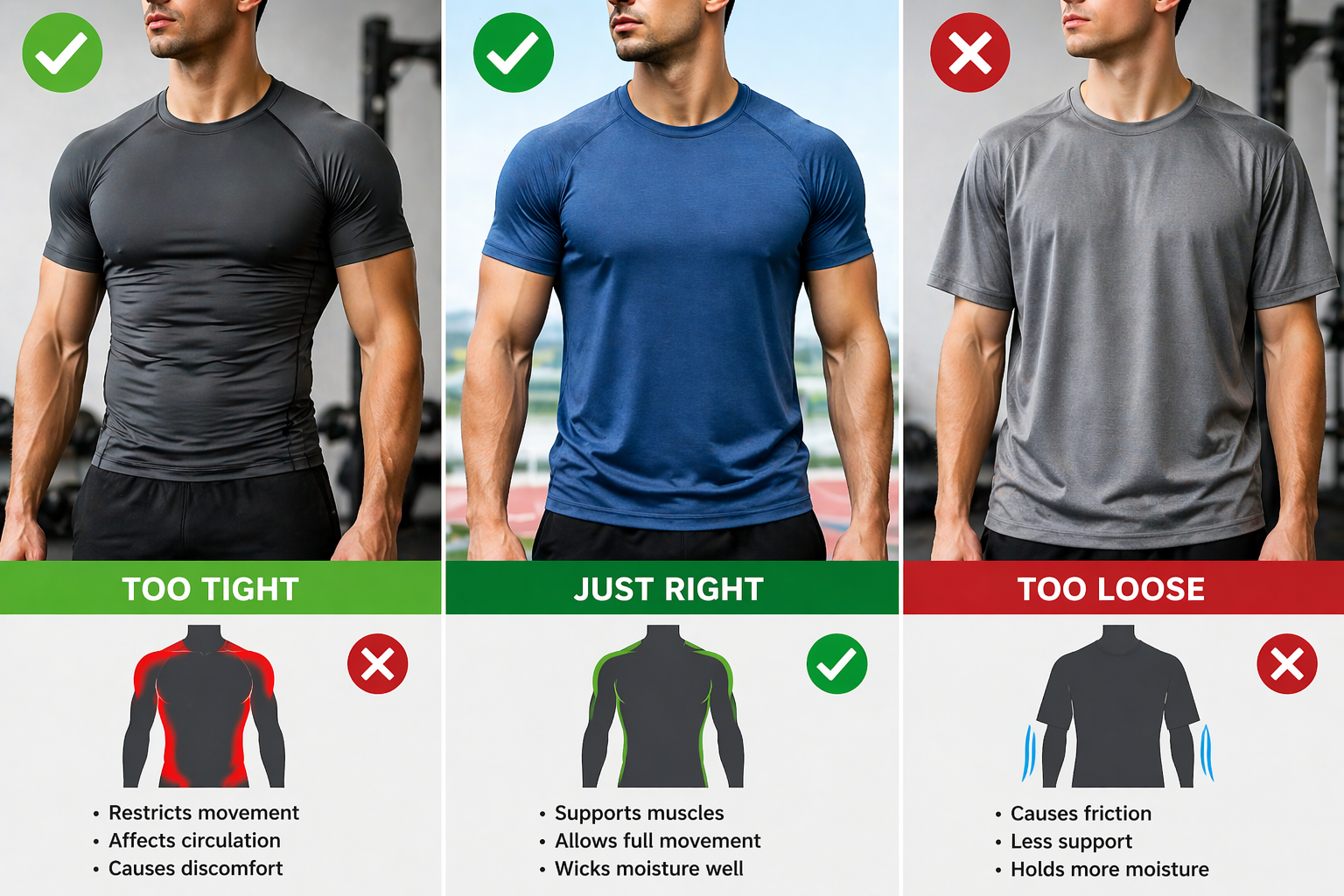
Performance sportswear should fit snug—but not restrictive. The ideal fit allows full range of motion while supporting muscles, managing moisture, and reducing friction. Too loose, and you lose performance benefits. Too tight, and you risk discomfort, restricted circulation, and reduced efficiency.
Finding the right balance is essential for comfort, performance, and injury prevention. The perfect fit depends on the sport, fabric type, and your body’s movement patterns.
Let’s break down exactly how tight performance sportswear should be—and why it matters more than most athletes realize.
Why Fit Matters in Performance Sportswear
Fit directly affects how your body moves and performs.
Well-fitted sportswear helps:
- Improve mobility
- Reduce muscle vibration
- Enhance circulation
- Prevent chafing
- Optimize temperature control
Poor fit, on the other hand, can lead to discomfort, distraction, and even injury.
Athletes often focus on brand or style, but fit is the most important factor.
The “Snug but Flexible” Rule
The golden rule of performance sportswear is simple:
It should feel like a second skin—not a compression bandage.
This means:
- The fabric sits close to your body
- It stretches naturally with movement
- It does not pinch or dig into the skin
- It allows normal breathing
If you feel restricted when bending, stretching, or twisting, the gear is too tight.
If the fabric shifts excessively or bunches up, it’s too loose.
Balance is key.
Compression Gear vs Standard Athletic Wear
Not all sportswear fits the same way.
Compression Gear
Compression garments are designed to fit tightly.
They provide:
- Muscle support
- Reduced vibration
- Improved blood flow
- Faster recovery
Compression gear should feel firm but not painful.
Signs of proper compression fit:
- Even pressure across muscles
- No numbness or tingling
- No deep indentations on skin
Standard Athletic Wear
Regular performance clothing should fit comfortably without excessive tightness.
It should:
- Allow airflow
- Move freely with the body
- Avoid restricting joints
Loose-fitting gear works well for low-intensity workouts, while fitted gear is better for high-performance training.
How Fit Affects Performance
The way your gear fits can directly impact performance.
Movement Efficiency
Tight, well-fitted clothing reduces drag and friction.
This is especially important in:
- Running
- Cycling
- Swimming
- Cross-training
Loose clothing can create resistance, slowing movement slightly.
Muscle Support
Snug clothing stabilizes muscles during activity.
This reduces:
- Muscle fatigue
- Energy loss
- Micro-movements that cause strain
Proper support helps maintain consistent performance.
Temperature Regulation
Fitted gear improves moisture-wicking efficiency.
When fabric sits close to the skin:
- Sweat is absorbed quickly
- Moisture spreads evenly
- Evaporation increases
This keeps the body cooler and more comfortable.
The Risks of Wearing Gear That’s Too Tight
While tight gear offers benefits, excessive tightness can cause problems.
Restricted Circulation
Clothing that is too tight may reduce blood flow.
This can lead to:
- Numbness
- Tingling
- Muscle fatigue
Healthy circulation is essential for performance.
Limited Range of Motion
Overly tight clothing can restrict movement.
This affects:
- Flexibility
- Agility
- Strength output
Athletes need freedom to move naturally.
Skin Irritation
Tight seams and pressure points can cause:
- Chafing
- Redness
- Skin irritation
This becomes more noticeable during long workouts.
The Risks of Wearing Gear That’s Too Loose
Loose sportswear also has drawbacks.
Reduced Performance Benefits
Loose clothing does not provide muscle support or compression benefits.
This may lead to:
- Increased fatigue
- Reduced stability
- Less efficient movement
Increased Friction
Fabric that shifts during movement can cause rubbing.
This leads to:
- Chafing
- Discomfort
- Distraction
Moisture Retention
Loose clothing may not wick sweat effectively.
This can make gear feel heavier and less comfortable.
Choosing the Right Fit for Your Sport
Different sports require different fits.
Running and Cycling
- Snug, aerodynamic fit
- Minimal fabric movement
- Lightweight materials
Strength Training
- Slightly fitted but flexible
- Allows full range of motion
- Durable fabrics
Yoga and Stretching
- Form-fitting but highly flexible
- Soft, breathable materials
- No restriction during movement
Team Sports
- Balanced fit
- Allows movement and durability
- Breathable design
Choosing the right fit for your sport improves both comfort and performance.
Fabric Type and Fit Relationship
Fabric plays a major role in how clothing fits.
Stretchable materials like elastane allow tighter fits without restricting movement.
Non-stretch fabrics require a looser fit to maintain comfort.
Moisture-wicking fabrics perform best when close to the skin.
This is why most performance gear uses blended materials.
Body Type Considerations
Fit should match your body shape.
Athletes with different builds may require different sizing approaches.
Tips include:
- Focus on comfort, not just size labels
- Try different brands for better fit
- Prioritize movement over appearance
A proper fit enhances confidence and performance.
How Fit Affects Odor and Hygiene
Fit also influences how fabrics handle sweat and odor.
Tighter gear:
- Moves sweat away from the skin faster
- Reduces moisture buildup
- Limits bacterial growth
However, some fabrics still retain odor over time.
If you want to understand why certain materials hold odor more than others, explore Why do some sports fabrics smell worse than others? for deeper insights into fabric behavior.
Choosing the right fit and fabric combination helps maintain freshness.
Testing the Fit Before You Buy
Before purchasing sportswear, test its fit with movement.
Try:
- Squatting
- Stretching
- Reaching overhead
- Walking or jogging
The clothing should move with you without restriction.
If possible, test gear in real workout conditions.
Signs You’ve Found the Perfect Fit
You know your sportswear fits correctly when:
- It feels comfortable immediately
- It stays in place during movement
- It does not restrict breathing
- It does not cause irritation
- It enhances confidence
The right fit should feel natural.
When to Replace Poorly Fitting Gear
Even well-fitted gear can lose its shape over time.
Replace gear when:
- Elasticity fades
- Fabric becomes loose
- Compression weakens
- Seams stretch or warp
Worn-out gear no longer provides the same performance benefits.
Final Thoughts
So, how tight should performance sportswear fit?
It should be snug enough to support movement, manage moisture, and enhance performance—but not so tight that it restricts circulation or flexibility.
The right fit balances comfort, function, and durability.
Athletes who prioritize proper fit gain a noticeable advantage in performance, comfort, and confidence.
In the end, the best sportswear doesn’t just look good—it works with your body to help you perform at your best.