
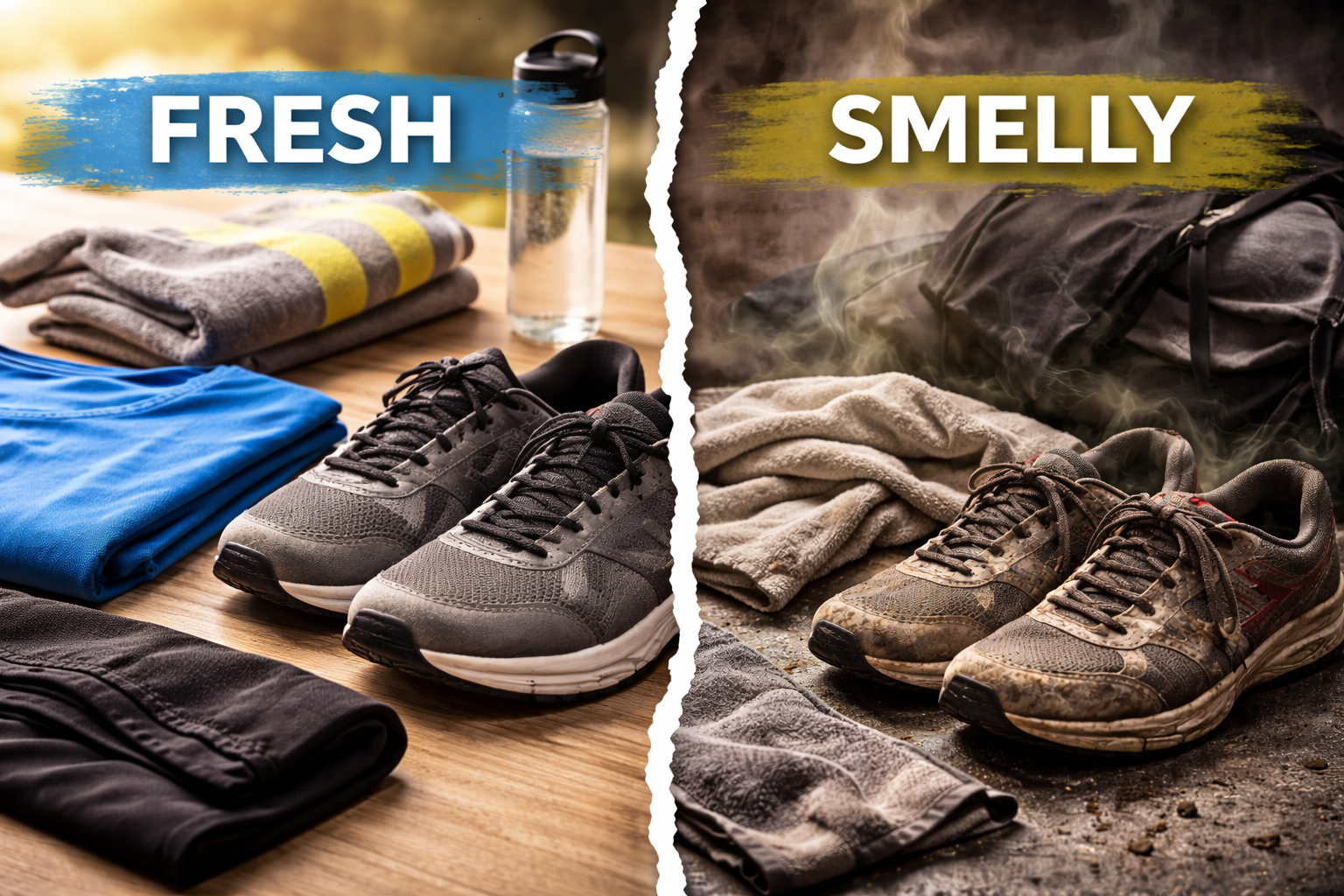
Some sports fabrics smell worse than others because of how they interact with sweat, bacteria, and moisture. The issue isn’t just how much you sweat—it’s how the material traps, holds, and reacts to that sweat over time.
Certain fabrics, especially synthetic ones, create an environment where odor-causing bacteria thrive. Others allow better airflow and faster drying, reducing odor buildup. Understanding the science behind this can help you choose better sports gear and keep it fresher for longer.
Let’s break down why this happens and how to fix it.
The Real Cause of Odor: Bacteria, Not Sweat
Sweat itself is mostly odorless. It’s made up of water, salt, and small amounts of proteins.
The smell comes from bacteria.
When sweat sits on your skin or clothing, bacteria break down those proteins and oils. This process produces compounds that create strong, unpleasant odors.
Sports fabrics that trap sweat give bacteria more time to grow and multiply. That’s when the smell becomes noticeable—and sometimes overwhelming.
Why Synthetic Fabrics Smell More
Synthetic fabrics like polyester and nylon are widely used in sportswear because they are lightweight and moisture-wicking.
However, they also have a downside.
These materials:
- Trap oils from sweat
- Hold onto bacteria
- Resist deep cleaning
- Retain odor molecules
Unlike natural fibers, synthetic fabrics have a structure that allows odor-causing compounds to cling tightly to the fibers.
Even after washing, these compounds may remain, causing the fabric to smell again during the next workout.
Cotton vs Synthetic Fabrics
Cotton behaves differently from synthetic materials.
Cotton
- Absorbs moisture easily
- Allows better airflow
- Releases odors more easily during washing
However, cotton also becomes heavy when wet and dries slowly, which can create discomfort during workouts.
Synthetic Fabrics
- Wick moisture away from the skin
- Dry quickly
- Provide better performance
But they trap odor more effectively, especially when exposed to repeated sweat cycles.
This is why a polyester shirt may smell worse than a cotton one, even after both are washed.
The Role of Fabric Structure
Not all synthetic fabrics are equal.
Fabric construction plays a major role in odor retention.
Tightly woven materials trap more bacteria and moisture. Looser weaves allow better airflow and faster drying.
Some performance fabrics include:
- Mesh panels
- Ventilation zones
- Anti-microbial treatments
These features reduce odor buildup by limiting bacterial growth.
Moisture Retention and Odor
Moisture is a key factor in odor development.
When fabrics remain damp:
- Bacteria multiply faster
- Odor compounds intensify
- Fabric degradation accelerates
Humidity also plays a major role in this process. In humid environments, moisture evaporates more slowly, allowing bacteria to thrive.
If you want to understand how environmental conditions impact your gear, explore How does humidity impact sports gear durability? to see how moisture affects performance and lifespan.
Why Odor Gets Worse Over Time
One of the most frustrating aspects of sportswear is that odor tends to get worse over time.
This happens because:
- Bacteria embed deep into fibers
- Residue builds up from sweat and detergents
- Fabric coatings wear down
Over time, even freshly washed gear may start to smell as soon as you begin sweating.
This is often called “permanent odor retention,” and it’s more common in synthetic fabrics.
Anti-Microbial Treatments: Do They Work?
Many sports brands advertise anti-microbial technology.
These treatments are designed to:
- Reduce bacterial growth
- Prevent odor buildup
- Extend freshness
While they can be effective initially, their performance may decline over time due to washing and wear.
Anti-microbial fabrics are helpful, but they are not a permanent solution.
Proper care is still necessary.
The Impact of Washing Habits
How you wash your sports gear affects how it smells.
Common mistakes include:
- Using too much detergent
- Washing in cold water only
- Skipping proper drying
- Leaving clothes in the washer too long
Detergent residue can trap bacteria instead of removing it.
Proper washing habits include:
- Using the right amount of detergent
- Adding vinegar occasionally to break down odor
- Washing gear soon after workouts
- Air drying thoroughly
These steps help reduce odor buildup over time.
Heat and Odor Activation
Heat can reactivate odor molecules trapped in fabric.
This is why some clothes smell fine when dry but begin to smell during exercise.
Body heat and moisture release trapped compounds, making odors noticeable again.
This effect is particularly strong in synthetic fabrics.
Why Some Athletes Sweat More Odor
Not all sweat is the same.
Factors that influence odor include:
- Diet
- Hydration levels
- Hormones
- Skin bacteria
Athletes who consume high-protein diets or certain foods may produce sweat that leads to stronger odors.
This interacts with fabric type, creating varying odor levels between individuals.
Environmental Factors That Make It Worse
External conditions also contribute to odor problems.
High humidity, poor ventilation, and warm temperatures all increase bacterial growth.
Gym environments, locker rooms, and closed spaces often trap moisture and heat, creating ideal conditions for odor development.
Proper storage and ventilation are just as important as fabric choice.
Choosing Odor-Resistant Sports Gear
When selecting sports gear, look for features that reduce odor buildup.
Key characteristics include:
- Breathable fabric design
- Moisture-wicking technology
- Anti-microbial treatment
- Lightweight materials
- Quick-dry capability
Merino wool is a popular option because it naturally resists odor while maintaining breathability.
While it may cost more, it often provides better long-term freshness.
How to Keep Sports Gear Smelling Fresh
Maintaining fresh gear requires consistent habits.
Follow these tips:
- Wash gear immediately after workouts
- Avoid leaving sweaty clothes in bags
- Use odor-neutralizing detergents
- Dry gear completely before storage
- Rotate between multiple outfits
Consistency is key.
Small habits make a big difference over time.
When It’s Time to Replace Your Gear
Sometimes, odor cannot be removed completely.
If your gear continues to smell despite proper cleaning, it may be time for a replacement.
Signs include:
- Persistent odor after washing
- Stiff or sticky fabric
- Reduced breathability
- Visible wear
Replacing gear ensures better comfort and hygiene.
Performance and Comfort Connection
Odor isn’t just a hygiene issue—it can affect performance.
Uncomfortable, smelly gear can:
- Reduce confidence
- Distract focus
- Cause skin irritation
- Limit airflow
Athletes perform best when they feel comfortable and focused.
Fresh gear supports both physical and mental performance.
Final Thoughts
So, why do some sports fabrics smell worse than others?
It comes down to how materials interact with sweat, bacteria, and moisture. Synthetic fabrics often trap odor-causing compounds, while natural fibers allow better airflow and odor release.
Environmental conditions, washing habits, and fabric design all play a role.
By understanding these factors, athletes can make smarter choices when selecting and maintaining sports gear.
Fresh, clean gear isn’t just about comfort—it’s about performance, confidence, and long-term durability.