
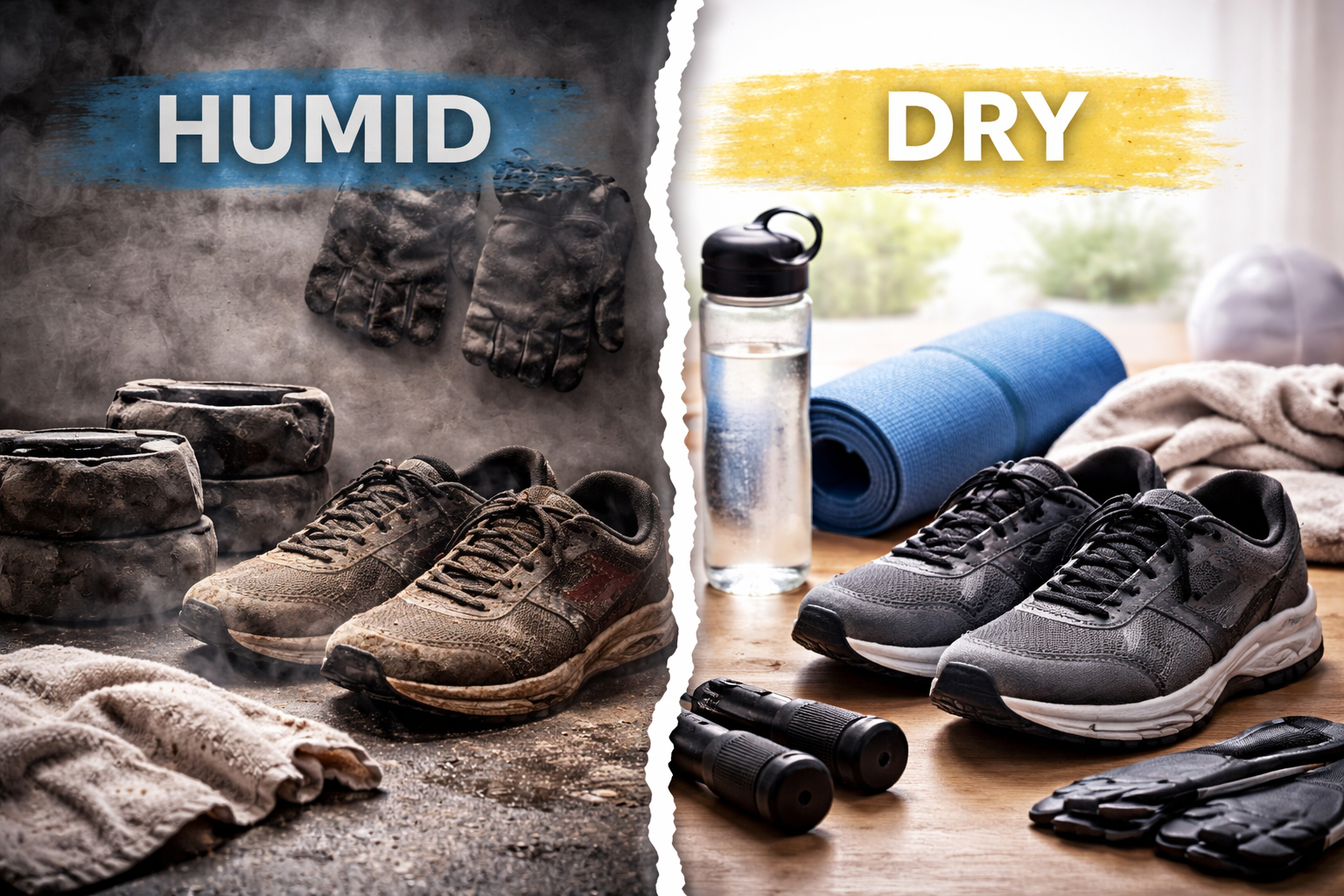
Humidity has a significant impact on sports gear durability. High moisture levels in the air accelerate material breakdown, promote bacterial growth, weaken structural integrity, and reduce overall performance lifespan. Whether you’re dealing with shoes, apparel, or protective equipment, humidity quietly shortens the life of your gear.
Many athletes focus on usage and wear, but environmental conditions—especially humidity—play an equally important role. Understanding how humidity affects sports gear helps you maintain equipment properly and avoid unnecessary replacements.
What Is Humidity and Why It Matters
Humidity refers to the amount of moisture present in the air. High humidity environments contain more water vapor, which interacts with materials in sports gear.
When gear is exposed to humid conditions:
- Moisture accumulates more easily
- Drying becomes slower
- Materials remain damp longer
- Microbial growth increases
This combination creates the perfect environment for degradation.
Even if gear is not soaked with sweat, ambient humidity can still affect its condition over time.
How Moisture Breaks Down Materials
Sports gear is made from a variety of materials, including:
- Synthetic fabrics (polyester, nylon)
- Foam cushioning
- Rubber components
- Leather materials
- Metal fasteners
Each of these materials reacts differently to moisture.
Fabric Degradation
Synthetic fabrics are designed to resist water, but prolonged exposure to humidity weakens their fibers. Over time, this can lead to:
- Reduced elasticity
- Thinning material
- Loss of shape
Cotton fabrics absorb moisture more easily, making them especially vulnerable to prolonged dampness.
Foam Compression and Breakdown
Foam is commonly used in shoes, helmets, and padding. Humidity accelerates foam breakdown by weakening its structure.
When foam absorbs moisture:
- It loses its ability to rebound
- Cushioning becomes less effective
- Shock absorption decreases
This directly impacts performance and safety.
Rubber and Adhesive Damage
Humidity also affects rubber components and adhesives used in sports gear.
In high-moisture environments:
- Glue bonds weaken
- Soles may separate from shoes
- Rubber becomes brittle or overly soft
This is why shoes stored in humid conditions often fall apart faster.
The Role of Sweat and Humidity Together
Humidity becomes even more damaging when combined with sweat.
Sweat contains:
- Water
- Salt
- Oils
- Bacteria
When sweat-soaked gear is exposed to humid air, it struggles to dry. This leads to prolonged moisture exposure, which accelerates material breakdown.
This is especially noticeable in:
- Gym clothes
- Running shoes
- Gloves
- Protective pads
Gear that stays damp for extended periods deteriorates much faster than gear that dries quickly.
Odor and Bacterial Growth
Humidity creates the perfect environment for bacteria and fungi.
When moisture lingers in sports gear:
- Bacteria multiply rapidly
- Odors become trapped in fabric
- Mold may develop in extreme cases
This not only affects the smell of your gear but also its hygiene and usability.
Persistent odor is often a sign that bacteria have deeply penetrated the material.
At this stage, cleaning becomes less effective, and replacement may be necessary.
Impact on Athletic Footwear
Shoes are particularly vulnerable to humidity.
High humidity can cause:
- Midsole breakdown
- Insole deterioration
- Loss of traction
- Increased weight due to moisture
Wet or humid conditions prevent shoes from drying properly between uses.
Over time, this leads to reduced cushioning and support.
Athletes may experience:
- Increased fatigue
- Reduced stability
- Higher risk of injury
Proper shoe care is essential in humid environments.
Effects on Protective Gear
Protective equipment such as helmets, pads, and braces is designed to absorb impact and provide stability.
Humidity can compromise these functions.
For example:
- Helmet padding may weaken
- Straps may stretch or loosen
- Foam inserts may lose density
This reduces the effectiveness of protective gear.
Athletes relying on compromised equipment face a higher risk of injury.
If you’re concerned about injury prevention, it’s important to understand which equipment offers proper protection. For more insights, explore What sports gear helps prevent overtraining injuries? to learn how gear supports long-term athletic health.
Clothing Performance and Comfort
Athletic apparel is designed to manage moisture efficiently. However, humidity disrupts this function.
In humid conditions:
- Sweat evaporates more slowly
- Clothing stays wet longer
- Fabric feels heavier
- Skin irritation increases
This affects comfort and performance.
Wet clothing can cling to the body, restricting movement and increasing fatigue.
Over time, repeated exposure to humidity reduces the effectiveness of moisture-wicking technology.
Long-Term Storage Problems
Humidity doesn’t just affect gear during use—it also impacts storage.
Gear stored in humid environments may:
- Develop mold or mildew
- Absorb persistent odors
- Experience material weakening
Closets, garages, and gym bags can trap moisture, especially if ventilation is poor.
Even unused gear can degrade if stored improperly.
Signs Humidity Is Damaging Your Gear
Athletes should watch for these warning signs:
- Persistent damp smell
- Visible mold or discoloration
- Cracking or peeling materials
- Reduced elasticity
- Loss of cushioning
- Sticky or degraded surfaces
These signs indicate that humidity has already affected the gear.
Replacing damaged equipment is often safer than continuing to use it.
How to Protect Sports Gear From Humidity
Fortunately, there are practical steps you can take to reduce humidity damage.
1. Dry Gear Immediately
After workouts, allow gear to air dry completely.
Avoid leaving items in gym bags or enclosed spaces.
2. Use Ventilated Storage
Store gear in areas with good airflow.
Avoid damp basements or sealed containers.
3. Use Moisture Absorbers
Silica gel packs or dehumidifiers can help reduce moisture levels in storage areas.
4. Rotate Gear
Using multiple sets of gear allows each item to dry fully between uses.
5. Clean Gear Regularly
Washing gear removes sweat and bacteria that contribute to degradation.
Use mild detergents and avoid excessive heat.
Climate Matters More Than You Think
Athletes in humid regions face greater challenges in maintaining gear durability.
Coastal areas, tropical climates, and summer environments often have high humidity levels.
In these conditions, gear may require more frequent maintenance and replacement.
Understanding your environment helps you take proactive steps to protect your equipment.
Does Expensive Gear Resist Humidity Better?
Higher-quality sports gear often includes materials designed to resist moisture and improve durability.
These may include:
- Advanced synthetic fabrics
- Reinforced stitching
- Improved adhesive bonding
- Anti-microbial treatments
However, no gear is completely immune to humidity.
Even premium equipment requires proper care and storage.
Investing in quality gear can extend lifespan, but maintenance remains essential.
The Connection Between Durability and Performance
Durability and performance are closely linked.
As gear degrades:
- Support decreases
- Comfort declines
- Efficiency drops
- Injury risk increases
Athletes often notice performance issues before realizing that gear is the cause.
Regularly evaluating gear condition helps maintain optimal performance.
Final Thoughts
So, how does humidity impact sports gear durability?
Humidity accelerates wear by trapping moisture, weakening materials, promoting bacterial growth, and reducing structural integrity. Over time, this leads to decreased performance and increased replacement frequency.
Athletes who understand these effects can take simple steps to protect their gear and extend its lifespan.
Proper drying, storage, and maintenance are key to preserving both durability and performance.
In the long run, managing humidity is not just about protecting gear—it’s about protecting your performance.